
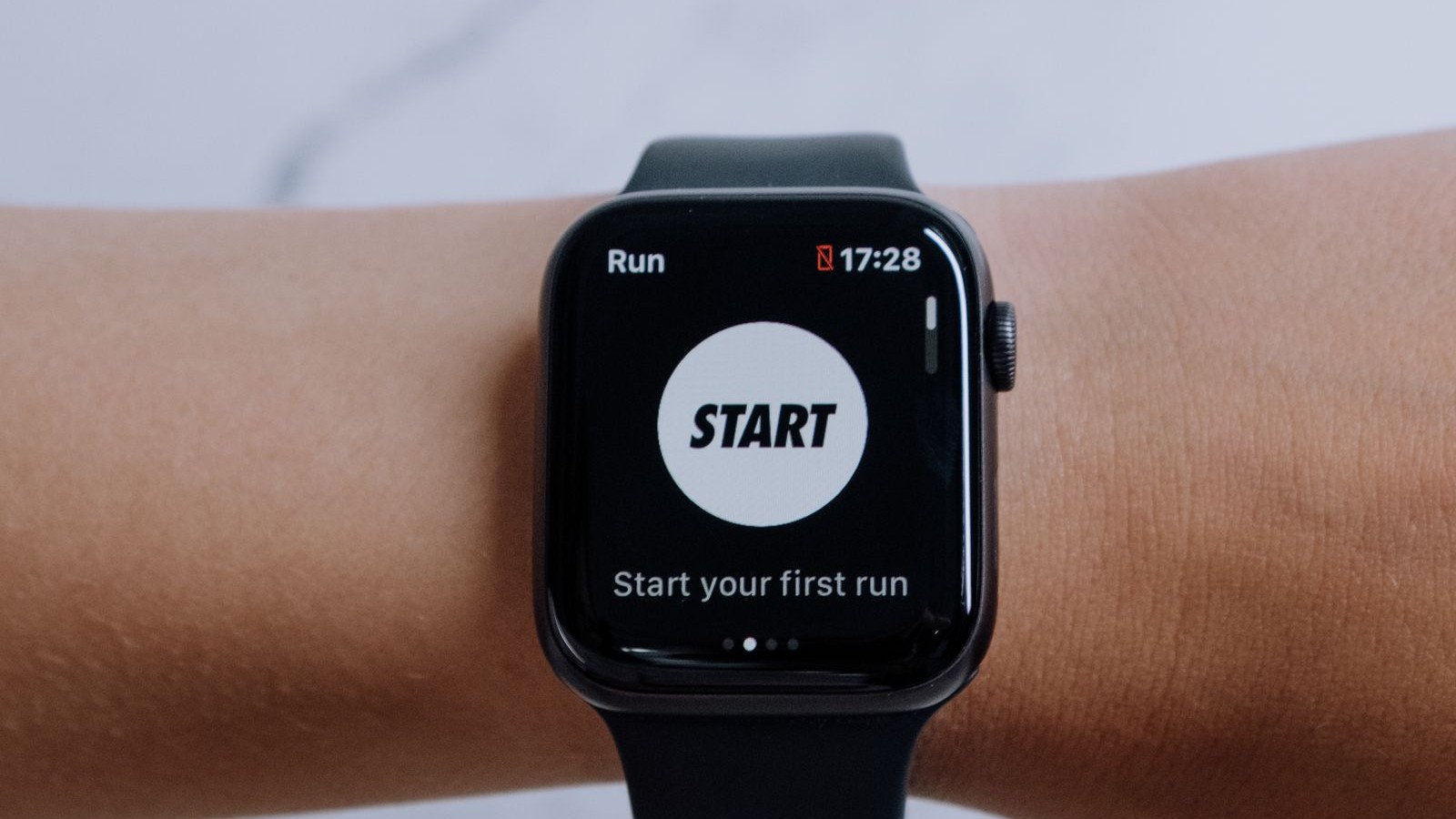
Your Tracker Isn't Accountability: Why the Watch, the App, and the Food Log Stopped Working the Month You Got Busy
You bought the watch. You installed the app. You logged every meal for eleven days straight, and the graphs looked great.
Then the quarter closed, or a deal went sideways, or you spent four days in three cities. You missed a log. Then a day. Then you stopped opening the app entirely, and the watch became a very expensive way to tell time.
That is not a willpower failure. It's a design failure. You are not the problem — your current system is.
What a tracker actually does
A tracker measures. That's the whole job, and it does it well.
It tells you that you slept 5 hours and 40 minutes. It tells you that you hit 6,200 steps. It tells you that you ate 2,400 calories and 90 grams of protein. Every one of those numbers is true and useful.
What it does not do is any of the following: decide what those numbers mean for your specific situation, change the plan when the numbers move in the wrong direction, notice that you've logged three bad sleep weeks in a row and adjust your training load accordingly, or care whether you open it tomorrow.
Measurement is not accountability. A bathroom scale has never once made a decision on your behalf.
The three jobs your tracker can't do
1. Interpretation. Your weight is flat for two weeks. Is that a stall, or is it water retention from a high-sodium travel stretch and three poor nights of sleep? Those two situations call for opposite responses — one needs an adjustment, the other needs patience. The app shows you the same flat line either way and offers you a badge.
2. Adjustment. Real weeks aren't uniform. A week with two client dinners and a red-eye is not the week the plan was written for. Somebody has to decide what to move, what to protect, and what to let go — before the week starts, not after it's already gone wrong. Apps hand you the same targets on Monday regardless of what Monday looks like.
3. Consequence. When you skip a logged meal, nothing happens. Nobody notices. There is no conversation on Thursday. And a system where missing has no cost is a system that will eventually be missed — not because you're undisciplined, but because you're busy and it's the lowest-priority thing on a list of thirty.
Why it always breaks in the same month
Look at the pattern honestly. It's rarely week one. It's usually week five, six, or eight — right when work spikes.
That's not coincidence. Self-tracking runs entirely on your attention, and your attention is exactly the resource that gets consumed first when things get busy. So the system depends on the thing that disappears under load. It's built to fail precisely when you need it most.
A system that only works during easy weeks isn't a system. It's a hobby.
What accountability actually looks like
Accountability has four parts, and no app has more than one of them:
- Someone is looking at your data besides you. Not a dashboard — a coach who knows what your last eight weeks looked like and what you told them about the next three.
- The plan changes before you fail, not after. Travel week coming? Training gets restructured on Friday, not abandoned on Wednesday.
- Missing is visible. Not to shame you. To trigger a conversation about what got in the way, which is where the actual fix lives.
- One bad week stays one bad week. This is the whole game. Nobody derails from a missed workout. People derail from the two weeks of "I'll restart Monday" that follow it.
Keep the tracker. Change its job.
None of this means throwing out the watch. Data is genuinely useful — it just needs to stop being your accountability system and go back to being an instrument.
Used well, a tracker is a reporting tool. It gives your coach the raw material: sleep trend, training completed, protein floor hit or missed, weight moving average. You collect; someone qualified interprets and adjusts. That division of labor is the difference between a number on a screen and a decision that changes your outcome.
And a note on how little you actually need to log. Most high-performers we work with don't need to weigh every meal forever. A protein floor and a calorie ceiling, tracked well enough to be directionally right, beats a perfect log you'll abandon in a month.
The honest test
Ask yourself one question: the last three times my plan fell apart, would having better data have prevented it?
Almost always the answer is no. You knew you weren't training. You knew what you were eating. You didn't have an information problem. You had a system problem — no adjustment, no consequence, no one to restart it with you.
That's a solvable problem, and it's the one Victory Fitness Co is built around. Our 12-week 1-on-1 coaching program is designed for people whose weeks are unpredictable: 20–30 minute efficient training sessions, protein floors and calorie ceilings instead of meal plans, and a coach who adjusts the plan when your calendar does. Over 1,200 clients, 10,000+ pounds lost, a 4.9/5 rating.
If you've already tried the apps, the bootcamps, and the group programs, see how the 12-week program works — then apply for a 1-on-1 discovery call and let's build a system that survives your actual schedule.