
Strong Enough for the Next 20 Years: The Strength and Capacity Markers That Actually Matter at 45
Ask a 45-year-old owner what "healthy" means and you'll usually hear a number: a scale weight, a waist size, maybe a mile time from college. None of those numbers tell you what actually matters at this stage — whether your body can still do the job for the next 20 years.
You are not trying to win a race or hit a physique goal. You are trying to stay capable: able to carry your own bags through three airports in a day, get off the floor after playing with your kids without narrating it, and finish a round of golf without your back deciding the back nine are optional. That's a different scorecard, and it's one almost nobody is actually tracking.
Why the scale is the wrong instrument
The scale can't tell you if the weight you're carrying is muscle or fat, and it says nothing about whether you can produce force when you need it — lifting a suitcase into an overhead bin, hauling a kid onto your shoulders, catching yourself on ice. Those are capacity questions, not weight questions. And capacity, unlike a number on a bathroom scale, is trainable at any age with the right system. It's also the thing that quietly erodes fastest after 40 if nothing is actively working against it.
The five markers that actually predict the next 20 years
These aren't gym-bro vanity metrics. They're the ones sports medicine and longevity research keep circling back to, because they correlate with how independently and pain-free people move decades from now.
- Grip strength. How hard you can squeeze is one of the single best predictors of overall strength and long-term health outcomes in the research. It's also the first thing that quietly slips when training drops off.
- Get up off the floor, unassisted, without using your hands. This is a full-body test of hip strength, balance and mobility — and it's a hard one for a lot of otherwise "fit" 45-year-olds who haven't sat on a floor in years.
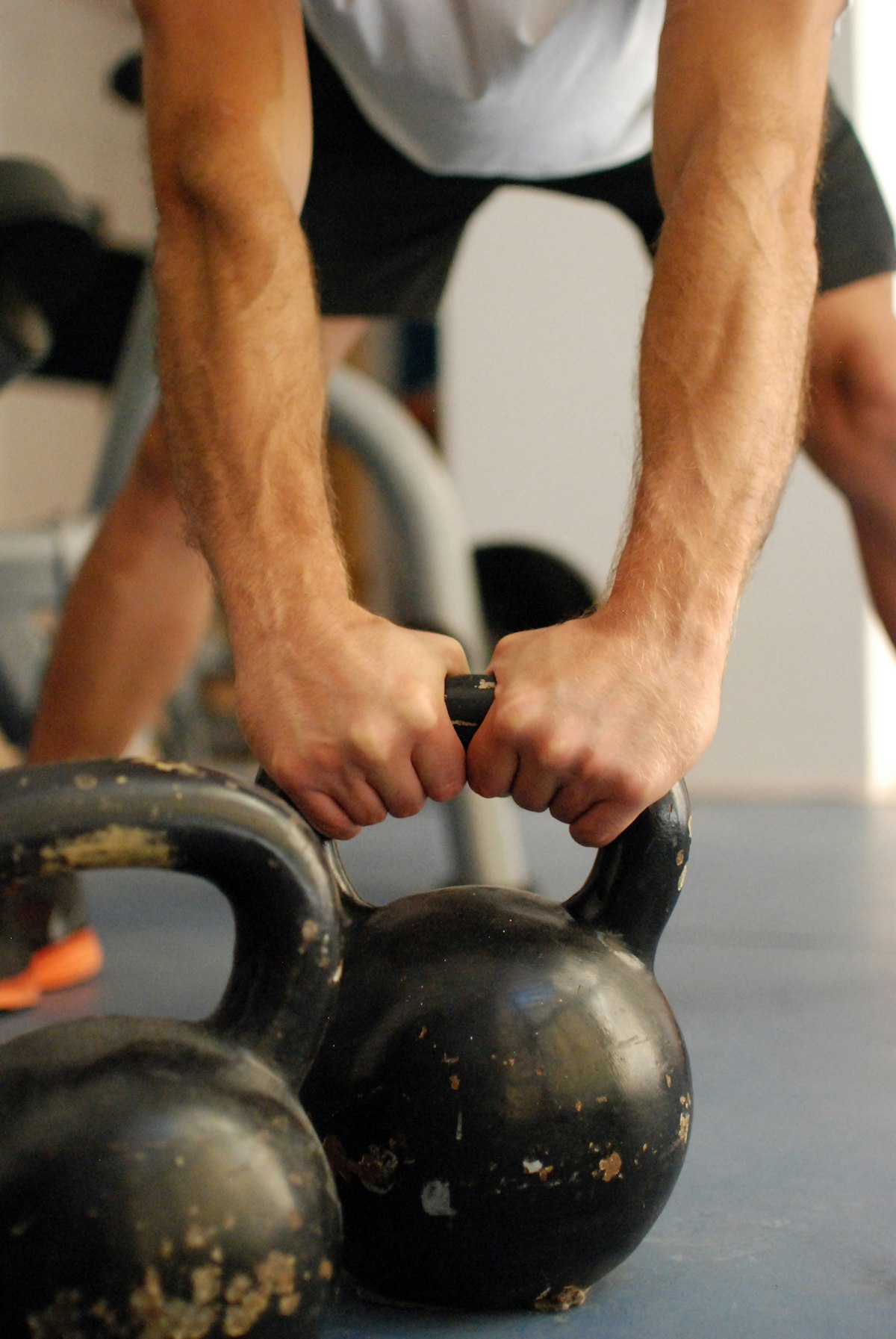
- Carry something heavy for 60 seconds. A loaded carry — think farmer's walk with a heavy kettlebell or dumbbell in each hand — tests grip, core bracing and shoulder stability all at once. It's also the closest thing in a gym to "carrying luggage" or "hauling a cooler."
- Hip hinge under load. Can you pick something heavy up off the ground with a flat back and strong hips, instead of your lower back doing all the work? This is the movement pattern behind almost every "I threw my back out picking up a laundry basket" story.
- Single-leg balance and step-up strength. Most falls and most knee injuries after 40 trace back to one leg being noticeably weaker or less stable than the other, unnoticed because two-legged exercises let the stronger side compensate.
Notice what's not on that list: a six-minute mile, a bench press max, or a body-fat percentage. Those can be nice side effects. They're not the point.
Why this matters more at 45 than it did at 25
At 25, your body forgives almost everything — bad sleep, skipped training blocks, three weeks of client dinners. At 45, muscle mass and grip strength decline on their own schedule whether you train or not, and recovery from a strained back or a blown-out knee takes months instead of days. The gap between "capable" and "compromised" is smaller than it used to be, and it closes faster if nothing is actively pushing back against it.
This is exactly where systems beat willpower. You don't need to white-knuckle your way through six gym days a week to hold onto these markers. You need 2-4 focused training hours built around the handful of movements that actually move these numbers — loaded carries, hip hinges, single-leg work, grip-intensive lifts — done consistently enough that your body never gets the chance to slide backward. That's minimum effective dose training: the least work that still keeps every one of those five markers moving in the right direction.
What this looks like in a real week
A client running a company doesn't need a bodybuilding split. He needs two or three sessions a week that hit a heavy carry, a hip hinge pattern, some single-leg loading and enough total volume to keep grip and joint strength climbing — programmed around board meetings and flights, not the other way around. When life gets loud for a week, the plan flexes instead of falling apart, because it was built for a real schedule from day one, not for a fantasy version of your calendar.
None of this requires you to become a gym person. It requires a coach who knows which five things to protect and builds everything else around your actual week — not a plan you have to protect from your life.
If you want to know where you actually stand on these markers — and what it would take to be stronger at 50 than you are right now — apply for a 1-on-1 discovery call. We'll start with an honest assessment, not a sales pitch.