
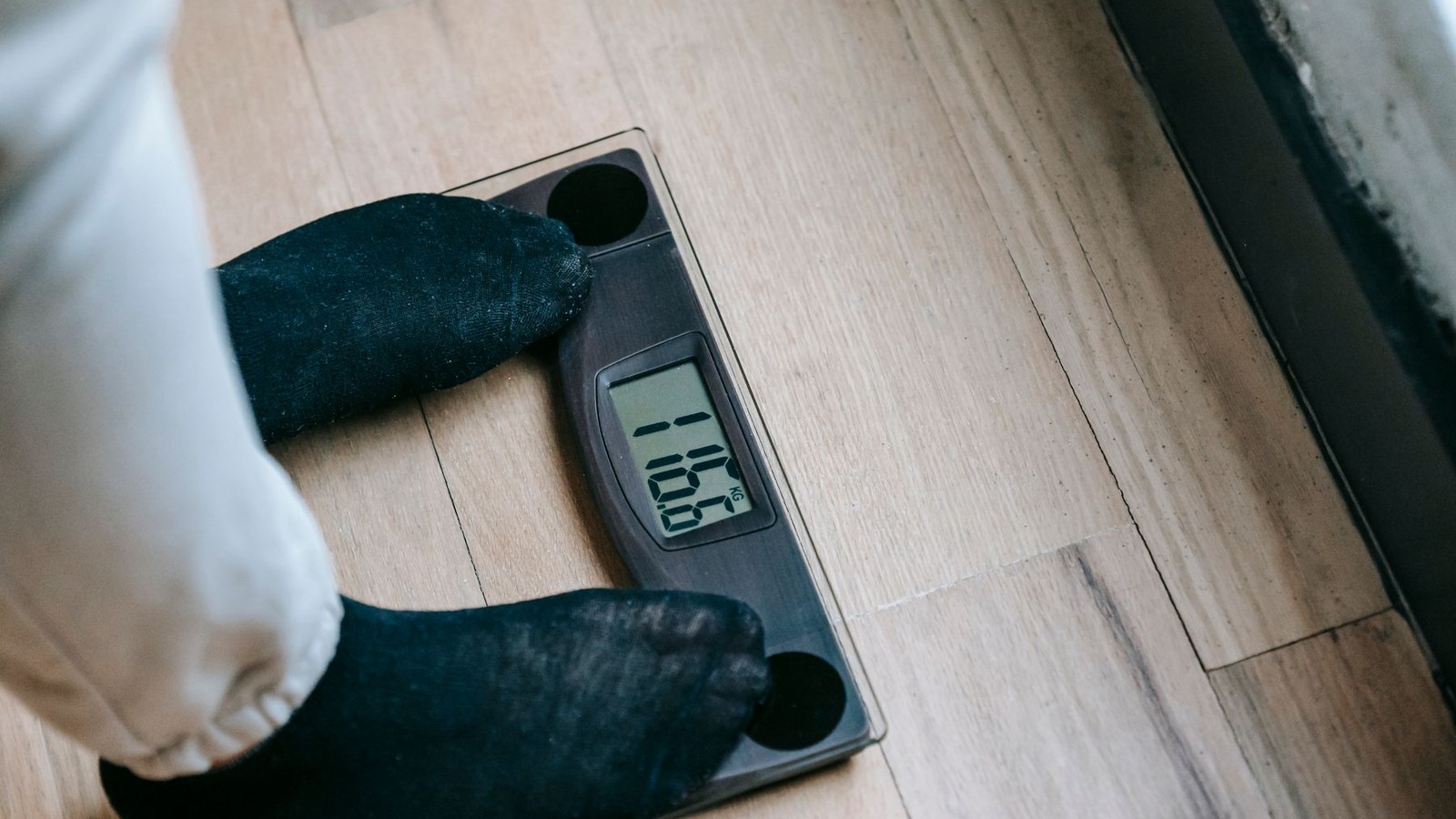
Stop Weighing Yourself Every Morning: The Four Numbers That Tell a Busy 40-Something Whether the Plan Is Working
You step on the scale. It's up 1.4 pounds from yesterday. You did everything right yesterday. So now you're standing in your bathroom at 6:15 a.m., annoyed, running a mental audit of a Tuesday that was actually fine.
That's the problem with daily weigh-ins. Not that the number is wrong — it's accurate. It's that scale weight measures something much larger than body fat, and reading it daily means reading noise as signal. Then you make decisions based on the noise.
You don't need to weigh yourself less because the number doesn't matter. You need to stop reacting to it daily, and start tracking four numbers that actually tell you whether the system is working.
What the scale is really measuring
Body weight on any given morning includes water, glycogen, food volume in transit, and sodium balance. A single high-sodium restaurant dinner can move it three pounds by morning. A hard training session pulls water into muscle tissue for repair — the scale goes up while the thing you wanted is happening.
Travel, poor sleep, and stress all raise cortisol, and cortisol holds water. So the week you're most likely to feel like the plan is failing is the week the scale is most likely to be lying to you.
Actual fat loss moves slowly and steadily. It does not announce itself in 24-hour increments. Trying to read it daily is like judging a business quarter by one afternoon's revenue.
Number 1: Your weekly average, not your daily weight
Weigh yourself daily if you want — the data is useful in aggregate. But only ever look at the seven-day average, and only ever compare it to last week's seven-day average.
Averaging smooths out the water swings and leaves the trend. A reasonable rate for a busy professional is roughly 0.5% to 1% of body weight per week. At 220 pounds, that's about 1 to 2 pounds a week. Slower than that is fine if the other three numbers are moving. Faster than that, consistently, usually means you're losing muscle alongside fat — which is the outcome that makes everything harder in a year.
One rule that saves people a lot of frustration: don't compare a week you traveled to a week you didn't. Compare travel weeks to travel weeks.
Number 2: Waist circumference
Measure at the navel, first thing in the morning, once a week, same conditions. Relaxed — not sucked in.
This is the number that catches what the scale hides. When you're training and eating enough protein, you can hold body weight steady for three weeks while your waist drops half an inch. That's muscle up, fat down — the outcome you actually want — and the scale reports it as "nothing happened."
If you only keep one measurement, keep this one. For men over 40 especially, waist circumference tracks visceral fat, and visceral fat is the piece with real metabolic consequences.
Number 3: Strength on two or three key lifts
Track a lower-body push, an upper-body push, and a pull. Log the weight and reps every session.
Strength is the cleanest available proxy for whether you're keeping muscle while losing fat. If your working weights are holding steady or slowly climbing while your waist shrinks, the plan is working, and it doesn't matter what the scale did on Thursday.
Strength falling off across several weeks is real information — usually that calories dropped too far, protein is too low, or sleep has quietly collapsed. That's a signal worth acting on. A one-day scale bump is not.
Number 4: Adherence — the number nobody tracks
Count the days per week you hit your protein floor and completed your planned sessions. Just a count. Six out of seven. Four out of seven.
This is the number with the most predictive power and the least emotional weight, which is exactly why it works. When results stall, adherence tells you which problem you have. Adherence at 6/7 and the trend stalled? That's a plan problem — change the plan. Adherence at 3/7? Nothing is wrong with the plan. The plan doesn't fit your life right now, and the fix is to make it smaller until it does.
Most people skip this number and go straight to blaming themselves. That's backwards. Adherence isn't a character score. It's a design specification. If a system only works on your easy weeks, it isn't the right system for the life you actually have.
How to run this in practice
- Sunday morning, five minutes. Weekly average weight. Waist measurement. Glance at the training log. Adherence count.
- Change one thing at a time, and only after two consecutive flat weeks with adherence at 5/7 or better. One flat week is normal variance.
- Judge a plan in four weeks, not four days. Four weeks is enough for the trend to be real and short enough to correct course.
What this actually buys you
Four numbers, five minutes a week, and the daily scale reading stops having any authority over your mood or your decisions. You stop cutting calories on a Wednesday because of water weight. You stop concluding you have no discipline during a week when you were traveling and sleeping five hours.
You're not the problem. The measurement system was. You already run your business on trailing indicators rather than reacting to a single day's numbers — your body deserves the same treatment.
If you'd like a coach reviewing these four numbers with you every week and making the call on what to adjust and when, that's exactly what 1-on-1 coaching at Victory Fitness Co. is built to do. Apply for a discovery call and let's look at what your data is actually telling you.