
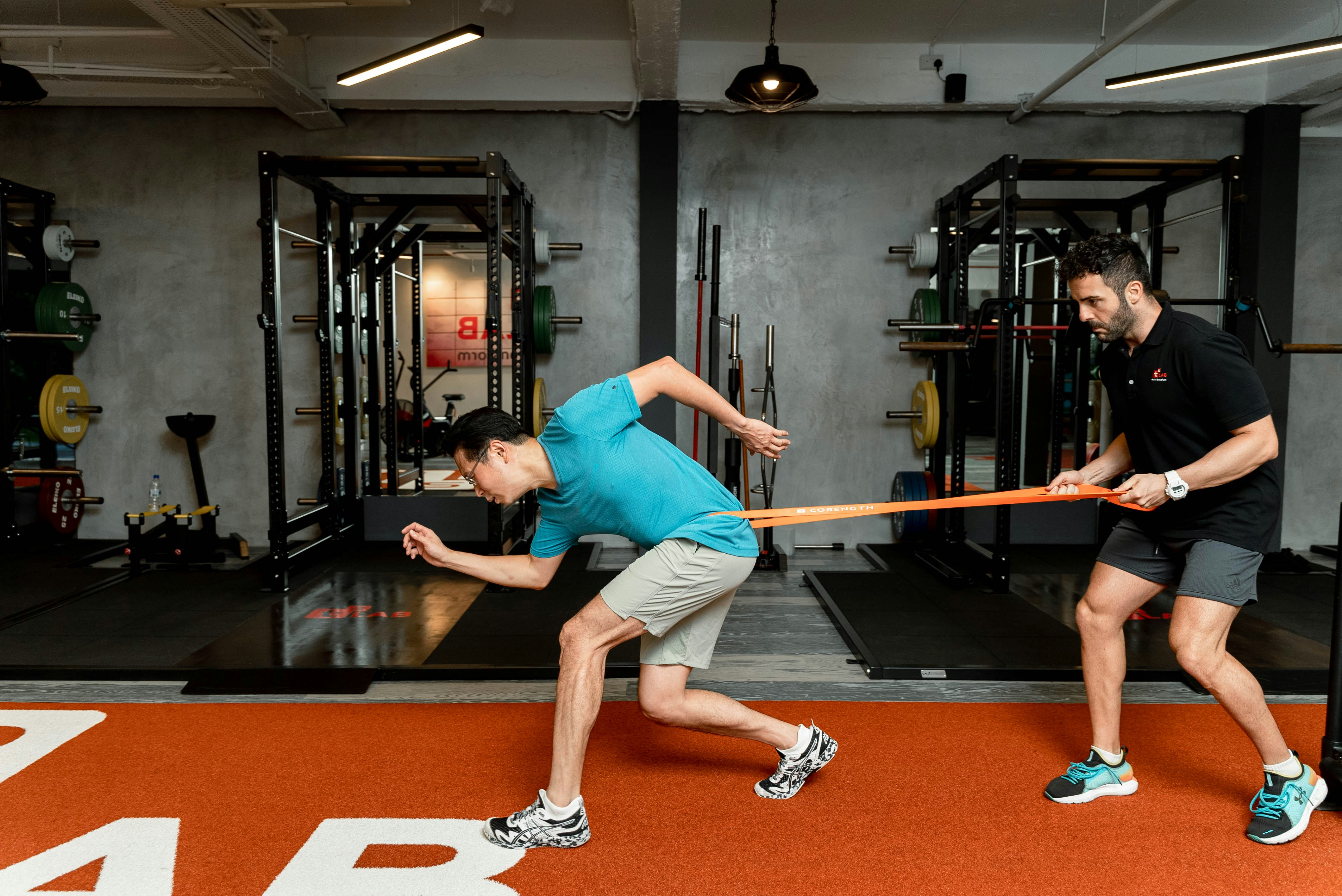
Old Injury, New Program: How a Coach Rebuilds Training Around a Bad Shoulder, Knee, or Back
You hurt your shoulder three years ago. Or your knee. Or your back went out after a long flight and never quite came all the way back. You rested it, it got better, and then you went back to the gym and did the same program you always did — and it flared up again. So you backed off. Then you backed off some more. Now "I can't do that anymore" has quietly become the reason you stopped training altogether.
Here's what we tell clients in week one: the injury isn't why the plan has to disappear. It's why the plan has to be built differently.
The mistake most people make first
Most high-performers handle an old injury one of two ways. They either push through it with the same lifts that caused the problem — more volume, more grit, hoping it holds — or they avoid the whole category of movement for years, which quietly turns one bad shoulder into a weak shoulder, a weak back, and a body that's afraid of load. Neither is a system. Both are guesses.
A program built around an injury doesn't start with "what can't you do." It starts with an honest map: which movements genuinely aggravate the area, which ones are uncomfortable but safe, and which ones you've been avoiding out of habit long after they stopped being a problem. Those are three different categories, and most people have never had anyone separate them.
What actually changes in the program
For a bad shoulder, that might mean trading a barbell bench press for a landmine press or a neutral-grip dumbbell variation that keeps the joint in a position it tolerates, while we still load the chest and triceps hard. For a knee, it might mean building quad and hip strength through sled work, step-ups, and controlled range before we ever reintroduce a full squat. For a back, it's almost always about building capacity in the hips and midline first — hinge patterns, carries, controlled core work — so the spine stops being the only thing doing the work.
None of that is "working around" the injury in the sense of doing less. It's minimum effective dose training applied to a smaller, more specific target: find the loads and angles that build strength without lighting up the joint, and progress them on purpose instead of by accident. The goal is the same 20–30 lbs of fat loss and visible strength gain any client is chasing — the path to get there just respects what your shoulder, knee, or back can actually handle this month.
Why "wait until it's fully healed" is the wrong instinct
Waiting feels responsible. In practice, it's usually the thing that makes the injury worse. Muscle around an unused joint gets weaker, which means less support for that joint, which means more pain with less provocation. The clients who come back strongest aren't the ones who waited the longest — they're the ones who started loading the right things sooner, under a plan that adjusted every week based on how the area actually responded, not on a program written for someone with a healthy shoulder.
That's the accountability piece as much as the programming piece. A system that can't adjust when pain shows up on a Tuesday isn't a system — it's a static plan that breaks the first time real life does. The whole point of having a coach in the loop is that a flare-up gets a same-week adjustment instead of a skipped month.
The takeaway
An old injury doesn't disqualify you from training hard. It just means the plan needs to be specific instead of generic — built around what your body can load productively right now, with a coach watching closely enough to adjust it before a bad week turns into a bad month. You don't need to be pain-free to start. You need a program that was actually built for the shoulder, knee, or back you have.
Apply for a 1-on-1 discovery call and we'll build your plan around what your body can handle today — not the body you used to have.